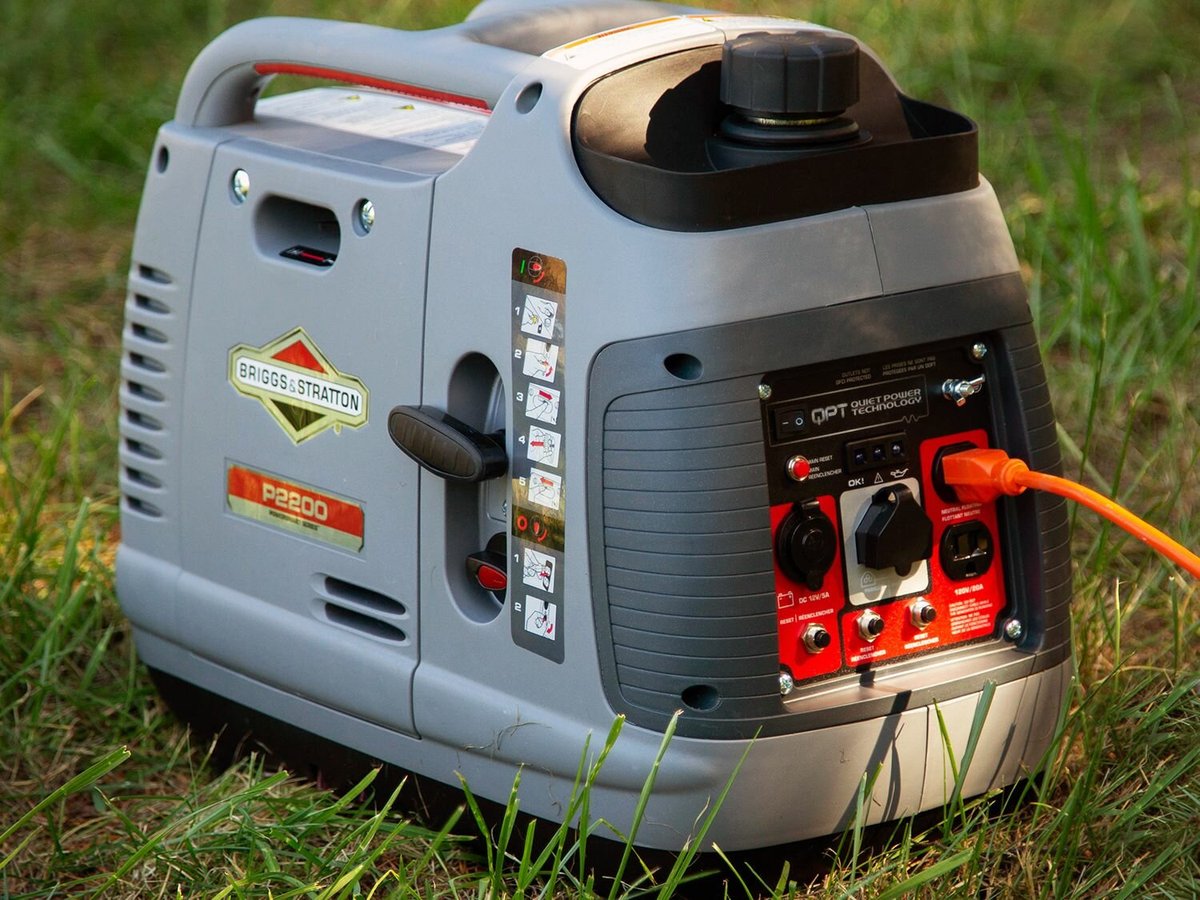
When the lights go out, and the familiar hum of modern life falls silent, the value of a reliable emergency generator becomes strikingly clear. For homeowners facing unpredictable weather, grid vulnerabilities, or simply seeking uninterrupted peace of mind, choosing the right Briggs & Stratton emergency generator isn't just about buying a machine—it's about investing in a fortress of steady power.
Briggs & Stratton, a name synonymous with robust engines and American manufacturing for over a century, has long been a leader in home standby generators. But with various models, sizes, and features, how do you navigate the options to find the perfect fit for your home? Think of this guide as your expert friend, helping you cut through the noise to make an informed decision you’ll feel good about for years to come.
At a Glance: Your Quick Guide to Briggs & Stratton Generators
- Assess Your Needs First: Determine what appliances are truly essential during an outage—from just the basics to your entire home.
- Generator Types: Briggs & Stratton offers options from select-circuit (essential items) to whole-house power, often utilizing smart management systems for efficiency.
- Fuel Matters: Natural gas (unlimited run-time via utility) and liquid propane (more power, tank-size limited) are your primary choices.
- Briggs & Stratton's Edge: Known for exceptional long-term reliability, robust engine performance, superior natural gas fuel efficiency (NGMax), and an industry-leading 10-year warranty.
- Installation is Key: The generator unit itself is only part of the equation. Professional installation and ongoing service from a trusted local dealer are paramount for performance and longevity.
- Budget Wisely: While Briggs & Stratton units are often competitively priced, factor in the total installed cost, which typically ranges from $9,000-$12,000 for an air-cooled system.
Unpacking Your Home's Power Needs: What to Protect?
Before you even glance at generator models, you need a clear picture of what you want to power when the grid fails. This isn't just about comfort; it's about safety, food preservation, and maintaining essential functions.
Start by thinking about the "must-haves" versus the "nice-to-haves" during an outage. Do you just need to keep the refrigerator running and a few lights on, or do you want to continue life as usual, including air conditioning, electric ranges, and entertainment systems? Your answer directly influences the type and size of the generator you'll need, which, in turn, impacts the cost.
Types of Home Generators: Tailoring Power to Your Lifestyle
Briggs & Stratton designs generators to meet a spectrum of homeowner needs. Understanding these categories is the first step in choosing the right Briggs & Stratton emergency generator.
Select-Circuit Home Generators: Powering the Essentials
For many households, the goal during an outage isn't to power everything, but to keep critical systems operational. Select-circuit generators are designed precisely for this. They focus on essential appliances, typically handling up to 10 electrical loads. Think of it: your refrigerator humming along, a few lights in key rooms, the TV for updates, and perhaps a microwave for quick meals.
These systems are often the most cost-effective entry point into home backup power. They ensure you can maintain basic comfort and prevent food spoilage without overspending on capacity you don't truly need.
Managed Whole-House Power Generators: Smart Solutions for Broader Coverage
What if you need more than the essentials, but a full-blown "everything-on-all-the-time" system feels like overkill or out of budget? This is where Briggs & Stratton's managed whole-house generators shine. These systems, utilizing advanced power management technologies like Amplify or Symphony II, are ingeniously designed to prioritize and cycle power.
They can handle virtually all your home's electrical needs, even running high-demand appliances like up to two air conditioners, with a smaller overall generator footprint. How do they do it? By intelligently managing the power load, ensuring that your most crucial systems always have power, and temporarily shedding less critical loads when demand peaks. It's like a smart conductor directing an orchestra, ensuring every instrument gets its moment without overwhelming the stage.
Whole-House Generators: Uninterrupted Luxury and Power
For larger residences, luxury homes, or anyone who simply refuses to compromise on power during an outage, whole-house generators are the ultimate solution. These robust systems provide maximum backup power, designed to handle even the highest-wattage appliances without a hiccup. Double ovens, hot tubs, multiple HVAC units—a whole-house system takes it all in stride, ensuring an outage feels like little more than a flicker.
This level of coverage offers the ultimate peace of mind, allowing you to maintain your full lifestyle regardless of what's happening on the grid.
Fueling Your Fortress: Natural Gas vs. Liquid Propane
The choice of fuel is a foundational decision when selecting any standby generator, and it's heavily influenced by what's already powering your home. Briggs & Stratton generators are designed to run on either natural gas (NG) or liquid propane (LP).
Natural Gas: The Continuous Power Stream
If your home is already connected to a natural gas line, this is often the most convenient and hands-off option. Natural gas standby generators draw directly from your existing utility service, meaning they can potentially keep running for weeks on end, limited only by the continuity of your gas supply. There's no need to monitor fuel levels, refill tanks, or worry about running out of fuel during an extended outage. It's an "install it and forget it" convenience that many homeowners prioritize.
Liquid Propane: Power-Packed and Flexible
Liquid propane offers a different set of advantages. While operating time is limited by the size of your fuel tank, LP generators generally deliver more power than natural gas models of comparable size. This can be a significant factor if you need maximum wattage for demanding appliances.
For homes without natural gas access, liquid propane is the default choice. You'll need to install a large enough LP tank to ensure adequate run time, especially for bigger generators that consume more fuel. However, LP also offers flexibility; if natural gas lines are disrupted, a well-stocked LP tank can still keep your power flowing.
Why Briggs & Stratton: A Legacy of Reliable Power
When you're comparing major generator brands, Briggs & Stratton consistently stands out for its commitment to long-term value, robust performance, and extensive experience. With over a century in the engine business, they bring a profound understanding of reliability and durability to their emergency generator lineup.
The Briggs & Stratton Edge: Built to Endure
Briggs & Stratton generators are known for their strong engine performance, designed to stand up to the rigors of emergency use. They emphasize long-term reliability, which is critical for a system you hope you'll rarely need but absolutely must perform when called upon.
A key differentiator for Briggs & Stratton is their NGMax technology. This innovation significantly increases natural gas fuel efficiency, allowing their NG generators to produce power levels much closer to their propane counterparts. For homeowners connected to natural gas, NGMax technology means you get more power from your existing utility service, enhancing overall value and performance.
Perhaps one of the most compelling reasons to choose Briggs & Stratton is their industry-leading warranty. While many competitors offer a 5-year warranty, Briggs & Stratton's PowerProtect DX lineup provides an exceptional 10-year warranty on parts, labor, and travel. This extensive coverage is a testament to their confidence in the durability and longevity of their generators, offering unparalleled peace of mind for a decade.
Briggs & Stratton vs. The Competition: A Head-to-Head Look
While this guide focuses on Briggs & Stratton, it's helpful to understand where they stand against other reputable brands, particularly Generac, a frequent contender. Both brands offer reliable residential standby generators at similar price points, but their focus and specific features can help you decide.
General Considerations: What Truly Matters
When comparing any generator, your decision should hinge on wattage needs, your budget, how sensitive you are to noise, smart-feature requirements, and crucially, the support and warranty offered. Both Briggs & Stratton and Generac excel in reliability, but they offer distinct advantages.
Wattage Options: Sizing Up Your Power
- Briggs & Stratton: Their PowerProtect lineup includes commonly used sizes like 13kW, 18kW, 22kW, and 26kW. These wattages are well-suited for most whole-home coverage scenarios, often working efficiently with power management systems.
- Generac: Offers a broader range, from 10kW all the way up to 26kW, including 13kW, 14kW, 15kW, 18kW, 20kW, 22kW, 24kW, and 25kW. This wider selection allows for slightly more precise sizing, especially for unique power loads that might fall between standard offerings.
Fuel Efficiency: The NGMax Advantage
As mentioned, Briggs & Stratton has a notable edge here with its NGMax technology. This innovative system significantly boosts the fuel efficiency of their natural gas generators, allowing them to produce power output closer to what liquid propane models deliver. This is a considerable benefit for homeowners relying on natural gas, potentially saving on fuel costs and extending effective run-time capacity.
Cooling Mechanisms: Keeping Things Cool
Both brands employ similar cooling strategies for their residential lines:
- Air-cooled generators: Typically cover models from 10kW to 22kW. These are simpler, often more compact, and suitable for most residential needs.
- Liquid-cooled options: Available for larger generators, usually 25kW and above. Liquid cooling is more efficient for higher power output and extended run times, common in large luxury homes.
Automatic Transfer Switches (ATS): Seamless Power Transitions
The automatic transfer switch (ATS) is the brain of your standby generator system, safely switching your home's power from the utility to the generator and back again.
- Briggs & Stratton: Offers ATS options ranging from 100 to 400 amps, covering the needs of most residential properties.
- Generac: Provides a wider array of ATS options, from 50 to 800 amps. While Generac offers more choices, Briggs & Stratton's range is more than sufficient for typical home applications.
Cold Starts: Ready for Winter
When temperatures drop, generators need to be ready to spring into action.
- Briggs & Stratton: Focuses on robust cold-weather hardware. This includes integrated battery warmers and oil warmers, ensuring the engine can reliably start even in freezing conditions. It's a proactive hardware-based approach to cold weather performance.
- Generac: Utilizes built-in start logic that intelligently delays engaging the electrical load until the engine has adequately warmed up. This software-driven approach helps protect the engine and ensures stable power delivery.
Noise Levels: Quiet Comfort
No generator is completely silent, but modern standby units from both brands are surprisingly quiet. Their air-cooled generators typically operate in the mid-60 decibel range, which is comparable to a normal conversation or a running dishwasher.
For specific comparisons:
- A Generac 22kW Guardian often runs around 67dB at 23 feet, dropping to the mid-50s dB in its Quiet-Test mode.
- A Briggs & Stratton 20kW model is generally around 64dB at 23 feet.
In real-world scenarios, the actual noise you perceive is heavily influenced by the generator's placement and installation. A strategic location further from living areas can make a significant difference.
Smart Features & Monitoring: Staying Connected
In our connected world, smart features offer convenience and peace of mind.
- Briggs & Stratton: Offers InfoHub, an app-based system for remote monitoring. InfoHub provides real-time alerts, performance feedback, and status updates directly to your smartphone or tablet. Coupled with their NGMax technology, it keeps you informed and efficient.
- Generac: Features Mobile Link, a more comprehensive monitoring system. It provides real-time alerts, detailed status updates, run-time data, maintenance reminders, and even integrates with smart thermostats like Ecobee. Generac also includes a Quiet-Test mode that helps save fuel.
While Generac generally offers a broader suite of smart features, Briggs & Stratton's InfoHub provides essential remote monitoring capabilities that most homeowners will find highly valuable.
Warranty: The Long-Term Promise
This is where Briggs & Stratton truly shines, offering one of the best warranties in the industry for residential standby generators.
- Briggs & Stratton: Their PowerProtect DX lineup boasts an impressive 10-year limited warranty covering parts, labor, and travel. This extended coverage provides exceptional long-term protection and demonstrates Briggs & Stratton's confidence in the durability of their products.
- Generac: Typically offers a 5-year limited warranty (e.g., on their 22kW Guardian models).
For homeowners prioritizing long-term peace of mind and protection, Briggs & Stratton's 10-year warranty is a compelling advantage.
Dealer Network & Parts: Local Support Matters
Both Briggs & Stratton and Generac have strong local dealer networks across the country. These networks are crucial not just for initial installation, but also for routine maintenance and emergency service. While Generac often boasts a broader overall network, Briggs & Stratton has a well-established presence, and their parts are often considered slightly easier to source and replace, which can simplify future maintenance.
When choosing your Briggs & Stratton emergency generator, the quality and responsiveness of your local dealer should be a top consideration.
The Real Cost of Preparedness: Beyond the Unit Price
Investing in a home standby generator is a significant decision, and it's important to look beyond just the generator unit's price tag. The total cost of ownership involves several factors.
Unit Price: A Baseline
- A 22kW Generac Guardian, for example, typically lists in the range of $6,800-$7,000.
- A comparable 22kW Briggs & Stratton PowerProtect often lists for a more competitive $5,800-$6,000.
This initial unit cost difference can be a persuasive factor for many, making Briggs & Stratton an attractive option from the outset.
Installed Cost: The Full Picture
The real cost of a fully operational standby generator system includes not just the unit, but also the automatic transfer switch, necessary electrical and gas line connections, concrete pad, permits, and professional labor.
For a typical air-cooled system (ranging from 14–22 kW) from either brand, you can expect the total installed cost to be between $9,000 and $12,000.
It's critical to obtain detailed, itemized quotes from reputable local installers. The quality of the installation is paramount for the generator's safe and efficient operation.
Your Path to Power Security: Making the Right Choice
Choosing the right Briggs & Stratton emergency generator is a journey that culminates in profound peace of mind. Here's how to navigate the final steps:
Prioritize and Size Correctly
Revisit your initial assessment: what absolutely needs power during an outage? Don't overbuy, but don't underbuy either. A generator that's too small won't adequately protect your home, leading to frustration. One that's too large might be an unnecessary expense. The best value always comes from choosing a properly sized generator that perfectly matches your home's essential and desired power loads. Your local Briggs & Stratton dealer can help you perform a load calculation to pinpoint the ideal wattage.
Embrace the Long-Term View
Think of your generator as a long-term investment. Briggs & Stratton's commitment to durability, coupled with its industry-leading 10-year warranty, makes it an excellent choice for homeowners seeking lasting value. Their NGMax technology for natural gas efficiency further enhances this long-term value, potentially saving on fuel costs over the generator's lifespan.
The Installer Makes the Difference
This cannot be stressed enough: installation and long-term service are the most crucial factors when selecting a new home generator. Even the best generator on the market will underperform or be unsafe if installed incorrectly. Seek out a trusted local installer who has a proven track record, understands local codes, and offers reliable ongoing maintenance and service. Ask for references, read reviews, and get multiple quotes to ensure you're partnering with an expert who will stand by their work.
Ultimately, your peace of mind hinges on the quality of both the equipment and the installation. When you're choosing the right Briggs & Stratton emergency generator, you're choosing a brand with a legacy of reliability and a distinct advantage in warranty and fuel efficiency. But the seamless integration into your home, and its unwavering performance for years to come, will largely depend on the local experts who bring it to life.
Take the first step today by consulting with a certified Briggs & Stratton dealer in your area. They can help you assess your specific needs, provide accurate load calculations, and offer transparent quotes for both the generator and its professional installation. Don't wait for the next storm to consider your options; proactive planning is the ultimate form of home security.