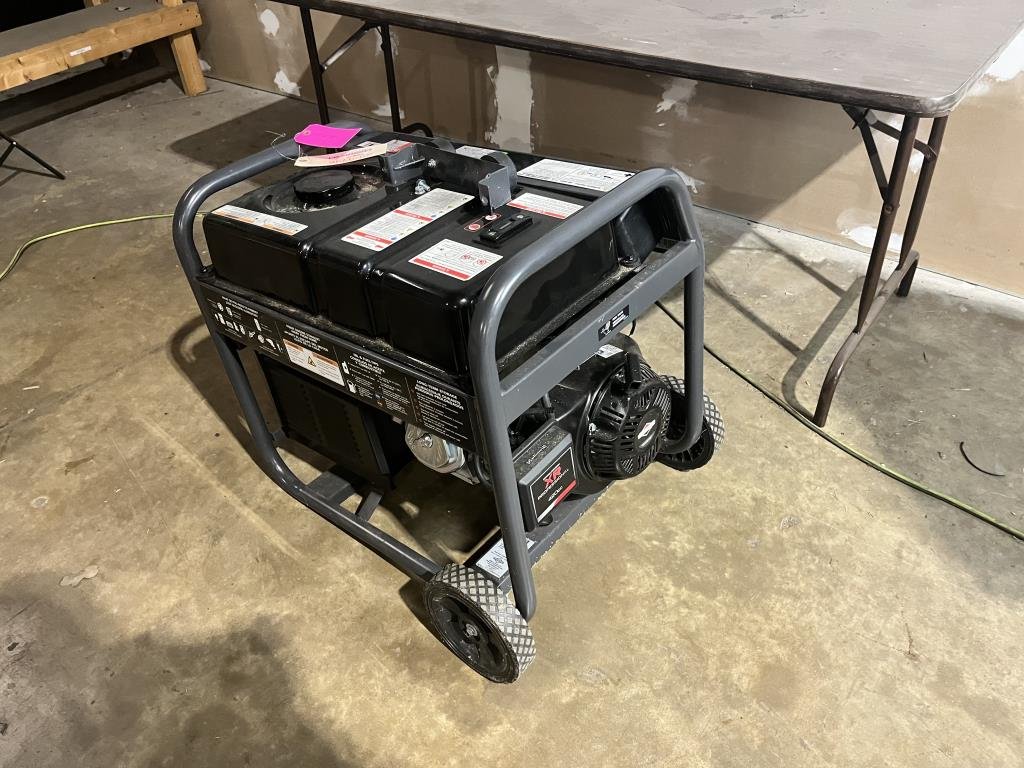
When the lights go out, a Briggs & Stratton generator can be a beacon of reliability, restoring comfort and essential services to your home or worksite. But that reliability comes with a critical caveat: safety. Ignoring Briggs & Stratton Generator Safety Protocols isn't just risky; it can be deadly, particularly when it comes to the silent threat of carbon monoxide (CO) poisoning. This comprehensive guide will equip you with the knowledge to operate your generator – whether portable or standby – with confidence, safeguarding yourself, your family, and your property.
We'll cut through the jargon, delivering actionable advice directly from Briggs & Stratton's own guidelines, ensuring you understand not just what to do, but why it matters. From the immediate dangers of CO to the intricate details of standby installation, consider this your essential manual for peace of mind.
At a Glance: Essential Generator Safety Takeaways
- Carbon Monoxide (CO) is a Silent Killer: Always operate generators outdoors, far from windows and doors.
- Know the 20-Foot Rule: Place portable generators at least 20 feet (6.1m) from occupied spaces.
- Read Your Manual: It’s your primary source for specific model safety and operation.
- CO Detectors are Non-Negotiable: Install UL 2034-compliant CO alarms in your home.
- Professional Installation for Standby: Licensed electricians and plumbers are required for standby generators to ensure safety and maintain warranty.
- Electrical Safety First: Never operate in wet conditions, with damaged cords, or bare wires.
- Fuel is Flammable: Handle with extreme care, ensure no leaks, and never smoke near the unit.
- Hot Surfaces Burn: Generators get extremely hot; allow them to cool before touching.
- Maintain Clearance: Ensure at least 3 feet of unobstructed space around the generator for ventilation.
Understanding the Invisible Threat: Carbon Monoxide (CO)
Carbon monoxide (CO) is not something you can see, smell, or taste. It's an insidious poison gas produced by burning fuels like gasoline, natural gas, or propane – exactly what your generator consumes. Inhaling CO replaces oxygen in your bloodstream, quickly leading to severe illness or death. This is why Briggs & Stratton Generator Safety Protocols place such a heavy emphasis on preventing CO exposure.
Recognizing the Symptoms:
Early signs of CO poisoning are often mistaken for the flu or common fatigue:
- Headache
- Dizziness
- Nausea
- Shortness of breath
- Fatigue
What to Do Immediately:
If anyone experiences these symptoms while a generator is running, do not try to shut off the generator first. Your priority is fresh air:
- Move to fresh air immediately. This means outdoors, away from the generator.
- Seek medical help. Call 911 or your local emergency services.
- Do not re-enter the area until it has been deemed safe by professionals.
Briggs & Stratton's CO Guard®: A Layer of Defense for Portable Units
Briggs & Stratton understands the critical nature of CO safety. Many of their portable generators feature CO Guard® Carbon Monoxide Shutdown technology. This patent-pending system continuously monitors CO levels in the generator's operating environment. If harmful levels accumulate, it automatically shuts down the generator. Designed with a sophisticated algorithm, CO Guard® aims to prevent false shutdowns even under challenging conditions like maximum output or heavy winds, ensuring the generator operates when needed, but safely.
This innovation, coupled with Briggs & Stratton's membership in the Portable Generator Manufacturers' Association (PGMA) and adherence to the ANSI/PGMA G300-2018 standard, underscores their commitment to safety. However, remember that CO Guard® is a secondary safety measure, not a replacement for proper outdoor operation and vigilance.
Safety First: Portable Briggs & Stratton Generators
Portable generators are incredibly useful for tailgating, camping, or temporary power outages. Their convenience, however, means their safety protocols are sometimes overlooked. Mastering these basics is non-negotiable.
Strategic Placement: The "20-Foot Rule"
This is perhaps the most crucial rule for portable generator safety: Operate generators ONLY outdoors. Never, under any circumstances, run a portable generator inside a home, garage, basement, crawl space, shed, or any partially enclosed area. Even with doors and windows open, CO can quickly reach dangerous levels.
To further protect against CO drift:
- Distance is Key: Place the generator at least 20 feet (6.1 meters) from occupied spaces, doors, and windows. This distance helps prevent exhaust fumes from inadvertently entering your home or other buildings.
- Exhaust Direction: Always point the engine exhaust away from any home or occupied space. Consider wind direction to ensure fumes are carried away, not towards, your living areas.
Ventilation is Key: 3-Foot Clearance
Even outdoors, a generator needs proper airflow to operate efficiently and safely. Ensure you maintain at least 3 feet (0.9 meters) of clearance on all sides of the unit. This allows for adequate ventilation, preventing the generator from overheating and reducing the risk of CO accumulation in its immediate vicinity.
Electrical Safeguards: Cords, Wet Conditions, and Shock
Generators produce powerful electricity, which demands respect. Electrical hazards are just as dangerous as CO poisoning.
- Inspect Cords: Do NOT use generators with worn, frayed, bare, or damaged electrical cords. Replace them immediately. Only use heavy-duty, outdoor-rated extension cords that are properly sized for the load.
- Never Touch Bare Wires: This should be self-evident. Avoid any contact with bare wires or electrical receptacles.
- Stay Dry: Do NOT handle the generator or electrical cords while standing in water, barefoot, or with wet hands or feet. Water conducts electricity, dramatically increasing the risk of shock. If you must work near an operating unit in damp conditions, stand on an insulated dry surface.
- In Case of Shock: If someone experiences an electrical shock, immediately shut down the power source if safe to do so, and contact authorities. Do NOT touch the victim directly if they are still connected to the power source, as you could become part of the circuit.
- Avoid Backfeeding: Never plug your portable generator directly into a wall outlet. This is known as "backfeeding" and can send electricity back into the utility grid, potentially electrocuting utility workers or people in neighboring homes. For connecting to your home's electrical system, always use a properly installed transfer switch.
Operator Responsibility: Manuals, CO Detectors, and Authorized Users
- Read the Operator's Manual: This cannot be stressed enough. Your generator's manual contains specific precautions, operating procedures, and maintenance schedules unique to your model. Always read it thoroughly before starting your generator for the first time.
- Install CO Detectors: While CO Guard® provides an extra layer of protection, installing battery-operated carbon monoxide alarms that meet UL 2034 safety standards inside your home is a vital backup. Check the batteries regularly (at least twice a year) to ensure they are functioning correctly.
- Authorized Use Only: Do NOT allow unqualified persons or children to operate or service the generator. Operating a generator requires understanding its safety protocols and functions.
- If you're looking for more general maintenance advice, consider checking out a portable generator maintenance checklist.
Advanced Protection: Briggs & Stratton Standby Generators
Standby generators, unlike portable units, are permanently installed and designed to automatically kick on during power outages. While offering unparalleled convenience, their complexity means their safety protocols are more stringent and often require professional intervention.
Why Standby Safety is Different: Complexity, Codes, and Professional Installation
Standby generators integrate directly into your home's electrical and fuel systems. This integration means:
- Higher Stakes: Improper installation or maintenance can lead to not only CO poisoning but also electrocution, fire, or explosions.
- Code Compliance: Installation must strictly comply with all local, state, and national electrical codes (like NFPA 70/NEC) and plumbing codes.
- Professional Mandate: Briggs & Stratton explicitly states that only current licensed electrical and plumbing contractors should attempt installation. Attempting DIY installation voids your warranty and poses severe risks. If you're considering choosing the right standby generator for your home, remember professional installation is paramount.
The Core Principles of Standby Safety
Every aspect of standby generator safety revolves around preventing harm from its powerful output and volatile fuel.
Isolation from Utility Power: Preventing Backfeed Dangers
Standby generators produce powerful voltage. A fundamental safety rule is to isolate the generator from utility power. Failure to do so can result in "backfeeding"—sending electricity back into the utility lines. This can be lethal for utility workers who may be working on "dead" lines, believing them to be safe. This is why a properly installed automatic transfer switch (ATS) is critical. The ATS detects a power outage, disconnects your home from the utility grid, and then switches the load to the generator. When utility power returns, it reverses the process, disconnecting the generator and reconnecting to the grid. Understanding how automatic transfer switches work is key for standby owners.
Professional Installation Mandate: Warranty and Life Protection
As mentioned, installation by licensed professionals isn't just a recommendation; it's a requirement. The warranty is VOID unless installed by licensed professionals. Beyond the warranty, it's about protecting lives and property. These experts ensure:
- Correct Electrical Hook-up: Proper grounding, circuit protection, and transfer switch integration.
- Safe Fuel System: Adherence to gas line codes, leak testing, and proper pressure regulation.
- Optimal Placement: Meeting clearance requirements for ventilation, exhaust, and access.
Critical Components & Controls: Disconnect, Fuse, and Modes
Standby generators have specific components designed for safety during operation and maintenance:
- The Disconnect Box: This enclosure houses critical electrical connections and often the main circuit breaker for the generator's output. It's a key point for isolating power during service.
- The 15 Amp Fuse: This fuse protects the DC control circuits of the generator. It must be removed before most maintenance procedures to prevent the generator from unexpectedly starting.
- AUTO/OFF/MANUAL Switch: Found on the control panel, this switch dictates the generator's behavior:
- "AUTO": The normal operating mode. The generator starts automatically upon a utility power outage and shuts down when power is restored.
- "OFF": Turns off the generator, prevents automatic or manual starting, and resets any fault codes. This is your go-to position before any service.
- "MANUAL": Starts the generator for maintenance runs or diagnostic checks.
Crucial Maintenance Safety Rule: Before any work on a standby generator, set the AUTO/OFF/MANUAL switch to OFF, remove the service disconnect from the disconnect box, AND remove the 15 Amp fuse. Why all three steps? Because a standby generator may start without warning during a power failure, even if the switch is off!
Pre-Operation & Maintenance: Safe Practices for Standby Units
Safe operation of a standby generator extends well beyond initial installation. It involves meticulous attention to its power source, fuel, and overall integrity.
Battery Power: Explosive Gases and Caustic Acid
The battery in your standby generator is essential for starting, but it also presents unique hazards:
- Explosive Hydrogen Gas: Storage batteries give off highly explosive hydrogen gas during recharging. The slightest spark (from connecting/disconnecting cables, tools, or static electricity) can cause an explosion.
- Prevention: Do NOT allow open flame, spark, heat, or lit cigarettes near the battery during or after charging.
- Caustic Electrolyte Fluid: Battery electrolyte fluid contains sulfuric acid. Contact with skin or eyes causes severe chemical burns.
- Prevention: Wear protective goggles, a rubber apron, and rubber gloves when working with or near the battery.
- Proper Disconnection: When performing maintenance that requires disconnecting the battery, always disconnect the cable indicated by NEGATIVE, NEG, or (-) first. Reconnect this cable last. This sequence minimizes the risk of accidental sparks. The 15 Amp fuse should also be removed.
Fueling Your Standby Generator: LP vs. Natural Gas, Flammability, and Leak Checks
Standby generators operate on either liquid propane (LP) or natural gas. Both are extremely flammable and explosive, posing a significant fire or explosion risk if handled improperly.
- LP vs. Natural Gas: LP gas is heavier than air and will settle in low areas if there's a leak, creating an invisible pool of explosive gas. Natural gas is lighter than air and will collect in high areas. Both can be ignited by the slightest spark.
- No Tampering: Do NOT tamper with the governed speed, modify the generator, or exceed its wattage/amperage capacity. This can compromise its safety systems and lead to dangerous overloads.
- Fuel System Integrity: The fuel supply system must be installed per all applicable codes. Before putting the unit into service, the entire fuel system lines must be purged and leak tested. NO leakage is permitted.
- If You Smell Fuel: Do NOT operate the generator if you detect the smell of fuel. Immediately investigate the source of the leak, shut off the fuel supply, and do not attempt to start the generator until the issue is resolved by a qualified professional.
- No Smoking: Absolutely do NOT smoke around the generator, especially during fueling or maintenance.
- Cleanliness: Wipe up any fuel spills immediately. Keep the area around the generator clean and free of debris that could ignite.
Hot Surfaces: The Silent Burn Risk
Running engines produce immense heat. The muffler and surrounding areas can reach or exceed 150°F (65°C). Contact with these hot surfaces can cause severe burns. Always allow the equipment to cool thoroughly before attempting to touch or service these areas.
General Operating Wisdom: Level Surface, Airflow, Enclosure Integrity, Troubleshooting Faults
- Level Surface: Operate the generator only on level surfaces. This ensures proper lubrication and stable operation.
- Adequate Airflow: Unobstructed cooling and ventilating air is critical. Ensure air inlet/outlet openings are not blocked by leaves, snow, or other debris. If necessary, construct a windbreak that doesn't impede airflow.
- Enclosure Integrity: The access door and roof of the generator enclosure must be installed when the unit is running. These components are part of its weather protection and noise reduction, and they also direct airflow.
- Environmental Protection: Do NOT expose the generator to excessive moisture, dust, dirt, or corrosive vapors, which can damage internal components and create electrical hazards.
- Air Cleaner: Do NOT start the engine with the air cleaner or its cover removed. This can allow debris into the engine and compromise performance.
- No Foreign Objects: Do NOT insert objects through cooling slots.
- No Stepping: Do NOT use the generator or any of its parts as a step.
- Shut Off on Faults: Immediately shut off the generator if:
- Electrical output is lost.
- It sparks, smokes, or emits flames.
- It vibrates excessively.
- These are signs of a serious problem that requires professional attention.
Installation Deep Dive: Laying the Foundation for Safety
Proper installation of a Briggs & Stratton standby generator is paramount, not just for functionality but for safety and warranty compliance. This isn't a DIY project.
Site Selection & Clearance: The Ideal Spot
Choosing the right location for your standby generator involves balancing convenience with critical safety and operational requirements:
- Outdoors Only: Like portable units, standby generators are strictly for outdoor use.
- Flat, Prepared Location: Install on a flat, prepared surface with good drainage. The unit typically comes bolted to a mounting pad. While a concrete slab isn't always required (unless mandated by local code), if used, it should be at least 3 inches thick and 6 inches wider/longer than the unit, attached with 1/4” masonry anchor bolts.
- Unobstructed Airflow: Ensure air inlet/outlet openings are never obstructed.
- Proximity: Install as close as possible to your Transfer Switch and existing fuel supply to minimize piping and wiring lengths (which also affects installation cost).
- Clearance from Combustibles: The generator enclosure requires a minimum of 3 feet (92 cm) from any combustible materials (e.g., siding, eaves).
- Access Clearance: Leave at least 3 feet (92 cm) of clearance around the entire enclosure for maintenance access.
- Exhaust Port Distance: The exhaust port must be at least 5 feet (152 cm) from any building opening (windows, doors, vents) to prevent CO entry.
Permits & Local Codes: Don't Skip the Paperwork
Before any installation begins, check with your local municipality. You will likely need:
- Electrical Permits: For connecting to your home's electrical system.
- Building Permits: For gas lines or any structural modifications.
- Noise Allowances: Some areas have regulations regarding generator noise.
Your licensed contractor will typically handle permit acquisition, ensuring your installation adheres to all local codes and ordinances.
Fuel System Engineering: Piping, Pressure, Components, and Types
The gaseous fuel system is a complex and critical part of a standby generator installation.
- Piping: All piping must conform to federal and local codes, be rigidly mounted, and protected against vibration. A supplied flexible gaseous pipe connects the generator fuel inlet to your rigid house piping, allowing for engine movement. This flexible pipe must remain visible for inspection, not concealed or underground.
- Piping Size: Correct pipe sizing is essential to maintain required fuel supply pressures and volume flow at full load. Use approved pipe sealant on all threaded connections.
- Fuel Types: The unit runs on natural gas or liquid propane. It's typically factory-set for natural gas, with an LP conversion kit included. If using LP, ensure it's commercial grade HD5 propane with minimum 2500 BTUs/ft3, max 5% propylene, 2.5% butane/heavier gas, and min 90% propane.
- Pressure: Maintaining correct fuel pressure is vital for optimal performance and safety.
- Natural gas fuel supply pressure: 5 to 7 inches of water column (in. W.C.) at full load.
- LP fuel supply pressure: 11 to 14 inches of water column (in.W.C.) at full load.
- Components: Minimum one manual shutoff valve is required in the supply line, located outside the building. A second manual shutoff valve inside the building, a sediment trap, and a manometer port are also recommended. The manometer port allows for temporary connection of a manometer (e.g., P/N 19495 digital manometer) to verify correct fuel pressure. Plug this port securely after testing.
- Fuel Consumption & Pipe Sizing: Installers will use specific charts provided in the manual to correctly size fuel pipes and propane tanks based on generator load, distance, and temperature, ensuring adequate fuel delivery even in extreme conditions.
Electrical Connections & Grounding: Neutral and Grounding Path
- AC Connection System: Briggs & Stratton standby generators use a single-phase, three-wire AC connection system.
- Neutral Bonding: Critically, the neutral is not bonded to ground at the generator itself. This separation is required when using an automatic transfer switch with a dedicated grounding electrode system for the generator.
- Grounding: An installer-supplied stranded copper wire connects to the disconnect box GND lug, routed through conduit to the Transfer Switch GND, and then to your main distribution panel's ground bus. This proper grounding protects against electrical shock.
- Utility Control Circuit: "240V AC Utility" leads deliver utility power to the circuit board, any optional battery warmer/oil heater, and charge the battery. These leads are connected from terminals in the disconnect box to the Transfer Switch.
Special Considerations: Altitude, Temperature, Essential Circuits
- Altitude & Temperature Derating: Engine power decreases by approximately 3.5% for every 1,000 feet (300 meters) above sea level, and by 1% for every 10°F (5.6°C) above 77°F (25°C). These factors must be considered by the installer when determining the total generator load to ensure it can power your essential circuits effectively.
- Temperature Below 10°F (-12.2°C): If the generator will operate in temperatures below this threshold, a battery warmer and oil heater MUST be installed to ensure reliable starting.
- Essential Circuits: The homeowner, in consultation with the installer, identifies "essential" circuits (e.g., heating, refrigeration, communication, well pump). The sum of these combined circuit loads must NOT exceed the generator's wattage/amperage capacity, factoring in the surge requirements of induction motors (which can draw ~3 times more watts for starting than running).
- For a more general overview of generators, check out Your Briggs and Stratton generator guide.
Before the First Spark: Preparing Your Standby Generator
Even after professional installation, there are vital checks to perform before the initial start-up, particularly if the unit has been sitting for a while.
Initial Checks: Oil, Battery, Fuel Line Integrity
- Engine Oil: Your engine is shipped from the factory with recommended synthetic oil (API SJ/CF 5W-30W) suitable for a wide temperature range. ALWAYS check the oil level before starting. Damage from attempting to crank or start the engine without proper oil voids the warranty. Synthetic oil does not alter standard oil change intervals.
- Battery Connection: The 12 Volt DC 33 Amp-Hour sealed, lead-acid rechargeable battery is factory installed. The 15 Amp fuse (for DC control circuits) is typically removed for shipping.
- To service or connect: Ensure the AUTO/OFF/MANUAL switch is OFF. Disconnect utility power. Remove the 15A fuse. Disconnect the NEGATIVE cable first, then the POSITIVE. To reconnect, attach the POSITIVE cable first, then the NEGATIVE. Ensure all connections are secure. Replace the 15A fuse. Restore utility power and set the switch to AUTO. Reset the exercise timer.
- Fuel Supply System: Before starting, ensure all pipe connections are tight, secure, and without leaks. Verify that all gas line shutoff valves are OPEN and that adequate fuel pressure is available for automatic operation.
Fuel System Configuration: LP Conversion
If your standby generator is factory-set for natural gas but you intend to use LP, the conversion procedure is critical and requires a specialty tool (P/N 19570) to install the main jet for LP gas.
- Ensure LP pressure is between 11-14 inches water column.
- Set the AUTO/OFF/MANUAL switch to OFF.
- Remove the 15 Amp fuse.
- Install the main jet for LP gas (using the specialty tool).
- Replace the air box cover and air filter.
- Close fuel shutoff valves.
- Do NOT install the 15 Amp fuse until all plumbing and wiring inspections are complete.
- Add oil per the engine manual if not already done.
- Open fuel shutoff valves.
- Install the 15 Amp fuse.
- Set the AUTO/OFF/MANUAL switch to AUTO.
Initial Start-Up (No Load)
This sequence purges air from the fuel lines and verifies basic electrical output:
- Set the AUTO/OFF/MANUAL switch to OFF.
- Ensure the utility circuit breaker in your transfer switch is OFF (open).
- Install the 15 Amp fuse.
- Set the AUTO/OFF/MANUAL switch to MANUAL. The generator will crank. Allow it to run for several minutes; air in the gaseous fuel lines may take some time to purge until it starts smoothly.
- Check the voltage between the emergency/generator connection lug and the neutral lug (should be 115-120V).
- Set the AUTO/OFF/MANUAL switch to OFF.
Automatic Operation: How Your Generator Responds to Outages
Once properly installed and configured, your standby generator operates intelligently:
- Utility Voltage Dropout Sensor: The system continuously monitors utility voltage. If the voltage drops below 70% of nominal, a 6-second timer energizes. After this timer expires, the generator initiates its start-up sequence.
- Utility Voltage Pickup Sensor: When utility voltage is restored (above 70% of nominal), a time delay begins. After this delay, the transfer switch will reconnect to utility power, and the generator will enter its engine cool-down phase.
- Engine Cool-down Timer: The generator runs for approximately 1 minute without load after utility power is restored. This allows the engine to gradually cool down before shutting off completely, extending engine life.
For information relevant to maintaining your generator throughout the year, refer to seasonal generator care tips.
Your Role: Customer & Installer Responsibilities
Safety is a shared responsibility. Both the generator owner and the installer play crucial roles in ensuring long-term safe operation.
For Homeowners: Read, Maintain, Know Your System
As the customer, your responsibilities include:
- Reading and Following Instructions: This includes not just this guide, but thoroughly reading and adhering to all instructions in your generator's operator's manual, especially concerning the selection of essential circuits.
- Regular Maintenance: Follow the recommended regular maintenance schedule. This prevents unexpected breakdowns and ensures the safety systems remain functional.
- Monitoring: Be aware of your generator's sounds, smells, and display messages. Address any unusual observations promptly.
For Professionals: Adhere to Standards, Ensure Safety
Installer responsibilities are even more rigorous:
- Observing Safety Rules: Adhering to all manufacturer safety rules and industry best practices.
- Following Manual Instructions: Meticulously following the detailed installation instructions provided in the Briggs & Stratton manual for the specific generator model.
- Code Compliance: Ensuring the entire installation (electrical and plumbing) strictly complies with all applicable national, state, and local codes, standards, and regulations.
Staying Vigilant: Beyond the Setup
Generator safety isn't a one-time check; it's an ongoing commitment.
Regular Maintenance: The Bedrock of Safety
A well-maintained generator is a safer, more reliable generator. Follow your operator's manual for specific maintenance schedules, which typically include:
- Oil Changes: Regular oil and filter changes.
- Air Filter Inspection/Replacement: Ensuring optimal airflow and engine protection.
- Spark Plug Checks: For efficient combustion.
- Battery Testing: Ensuring it holds a charge and is ready to start.
- Fuel System Inspection: Checking for leaks and proper pressure.
- General Cleaning: Keeping the unit free of debris.
Recognizing Warning Signs: When to Shut Down
Be proactive in identifying potential issues. Shut down your generator immediately if you observe:
- Unusual noises or vibrations.
- Smoke, flames, or a strong burning smell.
- Loss of electrical output.
- Any indication of fuel leaks.
- Any fault codes displayed on the control panel.
These signs often indicate a problem that requires professional diagnosis and repair.
The Power of Knowledge: Operator's Manual, Warranty Support
Always keep your operator's manual accessible. It's an invaluable resource for troubleshooting, maintenance schedules, and understanding specific features of your model. For installation information or warranty support, contact Briggs & Stratton at 1-800-743-4115 (8:00 AM - 5:00 PM CT). Remember, understanding your generator empowers you to use it safely and effectively.
Final Word: Empowering Safe Power
A Briggs & Stratton generator, whether portable or standby, represents a significant investment in your peace of mind. By diligently following these Briggs & Stratton Generator Safety Protocols, you transform that investment into truly reliable power, free from the hidden dangers of carbon monoxide and other hazards. Prioritize safety, empower yourself with knowledge, and ensure your generator is a source of security, not risk.