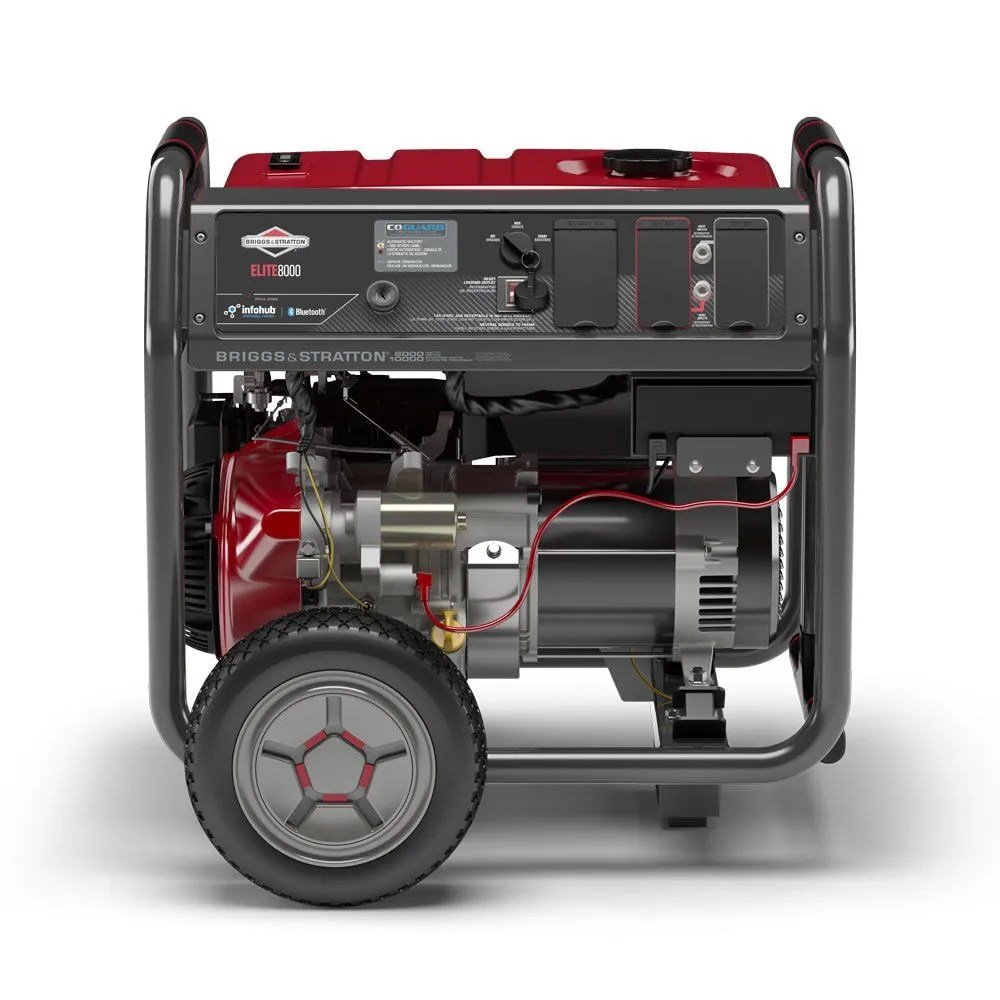
Whether you rely on your Briggs & Stratton generator for crucial backup power during outages, to fuel your adventures on the road, or for essential job site operations, you know its performance is paramount. But are you getting the most out of your machine? Beyond routine maintenance, a smart selection of Briggs & Stratton generator accessories and upgrades can significantly enhance its reliability, convenience, longevity, and overall output. Think of it not just as adding parts, but as investing in peace of mind and optimizing your power source.
This guide dives deep into the world of generator enhancements, helping you navigate the options, understand their benefits, and make informed choices to keep your Briggs & Stratton running at peak efficiency.
At a Glance: Key Takeaways for Your Briggs & Stratton Generator
- Model Number is King: Always identify your generator's exact model number (e.g., 1005400 or LAT1000AAE) before purchasing accessories to ensure compatibility.
- Maintenance Essentials: Regularly replacing oil filters, fuel filters, and spark plugs is fundamental for performance and longevity.
- Fuel System Health: A healthy fuel system (filter, valve, lines, cap) prevents engine issues and ensures reliable starts.
- OEM vs. Aftermarket: While OEM parts guarantee fit and performance, quality aftermarket options can exist for certain accessories; always research thoroughly.
- Safety & Convenience: Accessories like covers, wheel kits, and transfer switches aren't just "nice-to-haves"—they contribute to easier use and safer operation.
- Seasonal Replacement: Many filters and wear-and-tear parts should be replaced at least once a season, or more frequently with heavy use.
Decoding Your Briggs & Stratton: Why Model Numbers Matter
Before you even think about purchasing an accessory or upgrade, the first, most critical step is to identify your generator's model number. This isn't just a random string of characters; it's the DNA of your machine, detailing its specific build, components, and compatible parts.
Briggs & Stratton generator model numbers can appear in various formats—sometimes purely numeric (like 1005400), other times alphanumeric (such as LAT1000AAE). You'll typically find this vital information on a paper sticker or a metal plate affixed directly to the generator's frame, engine block, or sometimes beneath the control panel. Don't guess; find it, and jot it down. This simple step will save you immense frustration and costly returns down the line.
Core Maintenance & Performance Essentials: Keeping the Engine Humming
The heart of your Briggs & Stratton generator is its engine. Ensuring its optimal performance requires meticulous attention to a few key areas, primarily focusing on what goes in (fuel, air) and what comes out (exhaust, clean oil). These aren't just accessories; they're non-negotiable components for reliability.
The Lifeline of Lubrication: Oil Filters
Your generator's engine oil is its lifeblood, reducing friction and preventing wear. The oil filter is the guardian of this fluid, tirelessly removing harmful contaminants like dirt, metal shavings, and carbon deposits that accumulate over time. A clean oil filter ensures your engine runs smoother, cooler, and more efficiently.
- Why it's crucial: A genuine OEM oil filter is designed to specific micron tolerances, effectively trapping particles that could otherwise accelerate engine wear. This helps your engine maintain performance in line with strict EPA regulations.
- When to replace: It's recommended to replace the oil filter at least once a season, or every 50-100 hours of operation, whichever comes first. For heavy-duty use or dusty environments, more frequent changes are wise. This is often done in conjunction with an oil change.
- Metal Washer Upgrade: When changing your oil, consider replacing the metal washer on the oil drain plug. This genuine OEM metal washer, typically around 19mm (0.75-inch) outer diameter and 12mm (0.5-inch) inner diameter, ensures a tight seal and prevents leaks by evenly distributing pressure. It’s a small, inexpensive part that plays a big role in preventing mess and maintaining proper oil levels. Many experts recommend replacing the drain bolt itself (sold separately) along with the washer for maximum seal integrity.
The Fuel Highway: Filters, Valves, and Caps
Clean fuel is critical for any internal combustion engine. Your Briggs & Stratton generator relies on a pristine fuel supply to prevent clogs in the carburetor and ensure consistent power output.
- Fuel Filter: This unassuming plastic component is your generator's first line of defense against fuel contaminants. It filters out dirt, rust, and other debris before they can reach the carburetor, where even microscopic particles can cause significant operational issues. A clogged filter restricts fuel flow, leading to sputtering, loss of power, or even complete engine failure. Just as a specific Honda or Toro fuel filter keeps those engines running clean, your Briggs & Stratton generator relies on its own fuel filter, designed to meet its engine's specific needs.
- Replacement frequency: Replace your fuel filter at least annually, or immediately if you suspect contamination or experience fuel delivery issues.
- Fuel Valve: Attached to the bottom of the fuel tank, the fuel valve is your control point for fuel flow. This authentic Briggs & Stratton replacement part allows you to shut off the fuel supply, which is essential for transport, storage, or maintenance (to prevent fuel leaks or stale fuel from entering the carburetor). A faulty valve can lead to dangerous leaks or an inability to control fuel, necessitating replacement.
- Fuel Valve and Bushing Kit: Sometimes, the issue isn't just the valve but the seal around it. This durable rubber and plastic kit, including both a valve and a rubber cap, services a wide range of generators and pressure washers (over 150 models). Located on the underside of the fuel tank, it's crucial for delivering fuel to the carburetor. If the valve or its bushing is worn or damaged, it can lead to engine fuel starvation or failure. Replacement is rated as "Easy" by customers and typically requires just a screwdriver and pliers.
- Fuel Gauge Cap: More than just a cover, this OEM cylindrical cap often includes a built-in window for quick visual checks of your fuel level. Measuring approximately 5.25 inches in length with a 3-inch head diameter, it covers and protects the fuel gauge, indicates gas levels, and—critically—prevents debris entry and fuel leaks. A faulty cap can lead to inaccurate readings (leaving you stranded without power) and significant safety risks from fuel spills. To replace, simply twist off the old cap, clean the area, and twist the new cap securely into place.
- Fuel Tube Clip: While a specific metal clip might be an OEM part for Honda engines, the need for robust fuel tube clips is paramount for any generator, including your Briggs & Stratton model, to prevent leaks and ensure consistent fuel delivery. These small metal clips secure the fuel tubes, preventing them from kinking or detaching, which could lead to fuel starvation or hazardous spills. Consult your generator's model diagrams for correct application and use pliers for installation if needed.
Power Delivery & Mechanical Integrity: Beyond the Basics
While fuel and oil are primary, other components ensure the generator's mechanical and electrical systems function cohesively.
The Electrical Spark: Brush Assemblies
For the electrical side of your generator, the brush assembly is crucial. It’s what helps convert mechanical energy into usable electricity. Made up of carbon brushes that maintain contact with the generator’s rotor, these components wear down over time and are vital for consistent power output. While Generac has its own specific brush assemblies designed for high quality and performance, Briggs & Stratton generators also rely on well-maintained brushes.
- Why it's crucial: Worn brushes can lead to intermittent power, reduced output, or complete failure to generate electricity. Regular inspection and replacement ensure your generator reliably produces power when you need it most.
- Signs of wear: Look for reduced voltage, inconsistent power, or visible wear on the carbon brushes themselves.
Securing the Structure: Flange Bolts and Other Fasteners
It's the small, often overlooked parts that hold everything together. Your generator is a complex assembly of many components, all secured by fasteners.
- Flange Bolt: A simple yet critical metal flange bolt (typically 6mm diameter, 12mm length) is used to secure various parts across your generator's frame and engine. Its integrated flange helps distribute the load and secure components firmly in place. Over time, vibration, corrosion, or over-tightening can deform bolts or wear down their threads. Regularly inspect all bolts and replace individually if they show signs of deformation, corrosion, or worn threads. Installation involves hand-threading and then tightening with a wrench to the manufacturer's specified torque.
- Driven Ring (Contextual Note): While a "driven ring" might be specific to certain lawn mowers (like Snapper) and aids in propelling the mower, the principle of critical mechanical components applies across all engine types, including your Briggs & Stratton generator. Regularly inspecting all moving parts and their associated fasteners, bearings, and seals, ensures smooth operation. Just as a driven ring helps a mower function, every component in your generator plays a specific role, and its integrity is key.
Convenience & Protection Upgrades: Enhancing Your Generator Experience
Beyond internal components, several external accessories can significantly improve the usability, safety, and longevity of your Briggs & Stratton generator.
Weather Protection: Generator Covers
Your generator is an investment, and protecting it from the elements is paramount, especially if it’s stored outdoors or used during inclement weather. A quality generator cover guards against rain, snow, UV rays, dust, and debris.
- Benefits:
- Longevity: Prevents rust and corrosion on metal parts.
- Performance: Keeps internal components clean, reducing the risk of clogging or short-circuiting.
- Readiness: Ensures your generator is clean and ready to go when an emergency strikes.
- Choosing the right cover: Look for durable, weather-resistant materials (e.g., heavy-duty polyester with a waterproof coating) and ensure a snug fit for your specific Briggs & Stratton model. Some covers are designed to be used even when the generator is running, allowing for ventilation and exhaust clearance.
Portability & Mobility: Wheel Kits
If you have a portable generator, moving it can be a workout. A robust wheel kit transforms your stationary power source into a mobile one, making it easy to transport across uneven terrain, around a job site, or simply into storage.
- Features to look for:
- Solid wheels: Puncture-proof, never-flat wheels are ideal for diverse environments.
- Sturdy handles: Comfortable grips and durable construction are essential.
- Easy installation: Many kits are designed for quick, bolt-on attachment.
- Who needs it: Anyone who needs to move their generator frequently, from homeowners to contractors.
Remote Monitoring & Control: Smart Capabilities
Modern generators, and even some older models with upgrades, can benefit from smart accessories that offer remote monitoring or control.
- Remote Start/Stop Kits: Some Briggs & Stratton models offer kits that allow you to start and stop the generator from a distance using a key fob. This is a huge convenience, especially during bad weather or if the generator is placed in an inconvenient location.
- Hour Meters: While many generators include them, if yours doesn't, an aftermarket hour meter is a simple, inexpensive add-on that helps you track maintenance intervals precisely. Knowing exactly how many hours your generator has run makes it easier to schedule oil changes, filter replacements, and other vital services.
- Fuel Level Sensors: Beyond the basic fuel gauge cap, some advanced accessories can provide more precise fuel level readings, sometimes integrated with smart home systems or smartphone apps, letting you know when it's time to refuel without a trip outside.
Safe Power Distribution: Transfer Switches & Power Cords
Safely connecting your generator to your home or essential appliances is paramount.
- Manual Transfer Switch (MTS): For whole-home backup, a manual transfer switch is a non-negotiable safety device. It isolates your home's electrical system from the utility grid, preventing dangerous backfeed that could injure utility workers. When the power goes out, you manually switch your home over to generator power.
- Automatic Transfer Switch (ATS): For Briggs & Stratton emergency generators that are permanently installed (standby generators), an ATS detects a power outage and automatically starts the generator, then switches your home's power source without any manual intervention. This is the ultimate convenience and safety upgrade for hands-off operation.
- Heavy-Duty Extension Cords: Investing in high-quality, outdoor-rated extension cords specifically designed for generators (e.g., 10-gauge or 12-gauge) is crucial. Undersized cords can lead to voltage drop, overheating, and potential fire hazards. Ensure they are rated for the total wattage you plan to draw.
Troubleshooting Common Generator Pitfalls (and How Accessories Help)
Many common generator problems can be prevented or solved with the right accessories and attention to detail.
- "My generator won't start!"
- Fuel System: The primary culprit is often stale fuel or a clogged fuel filter/carburetor. Regularly replacing your fuel filter and using a fuel stabilizer (an accessory in itself!) can prevent this. If the fuel valve is faulty, it won't deliver fuel, requiring replacement of the Briggs & Stratton fuel valve or the entire fuel valve and bushing kit.
- Spark Plug: A fouled spark plug can prevent ignition. Keep a spare and know how to replace it.
- "It's running rough or surging."
- Fuel Flow: Again, a partially clogged fuel filter is a common cause. Ensure the fuel tube clips are secure and there are no kinks in the line.
- Oil Level/Quality: Low or dirty oil puts strain on the engine. A clean oil filter and fresh oil are essential.
- "No power output!"
- Brush Assembly: If the engine runs but no electricity is produced, worn-out brush assemblies are a likely suspect. Inspect them for wear.
- Circuit Breakers: Check if the generator's circuit breakers or your power cords' breakers have tripped.
Pro Tips for Choosing & Installing Generator Accessories
1. Always Opt for OEM When It Matters Most
For critical internal engine components like oil filters, fuel filters, and fuel valves, genuine OEM (Original Equipment Manufacturer) Briggs & Stratton parts are often the safest bet. They are engineered to precise specifications, guaranteeing fit, function, and longevity. While aftermarket options exist, ensure they meet or exceed OEM standards before purchasing.
2. Check Compatibility (Again!)
Even after finding your model number, double-check the accessory's compatibility list. Many online retailers provide "Will this fit my model?" tools. When in doubt, contact Briggs & Stratton customer service with your model and serial number.
3. DIY vs. Professional Installation
Many accessories, like fuel gauge caps, fuel filters, or oil filters, are designed for easy DIY installation. Instructions are usually straightforward, and required tools (like a screwdriver, wrench set, or pliers) are common. However, for more complex electrical upgrades like transfer switches or major engine repairs, consulting or hiring a qualified electrician or small engine mechanic is highly recommended. Your safety and the integrity of your generator are paramount.
4. Consult Your Owner's Manual
Your Briggs & Stratton owner's manual is an invaluable resource. It outlines recommended maintenance schedules, compatible parts, and sometimes even specific accessory recommendations. It also provides diagrams that can be crucial for locating parts like fuel tube clips or understanding the assembly of a driven ring (if applicable to a different B&S product you own).
The Long-Term Value of Smart Upgrades
Investing in the right Briggs & Stratton generator accessories and upgrades isn't just about fixing a problem; it's about extending the life of your equipment, improving its operational efficiency, and enhancing its reliability. From the humble flange bolt that secures crucial components to advanced remote monitoring systems, each addition or replacement plays a role in transforming your generator from a simple power source into a truly optimized and dependable system.
Whether you're preparing for the next big storm, powering a remote cabin, or keeping your worksite productive, taking the time to understand and implement these accessories and upgrades will ensure your Briggs & Stratton generator is always ready to deliver when it matters most.